Understanding ADHD and Advocacy
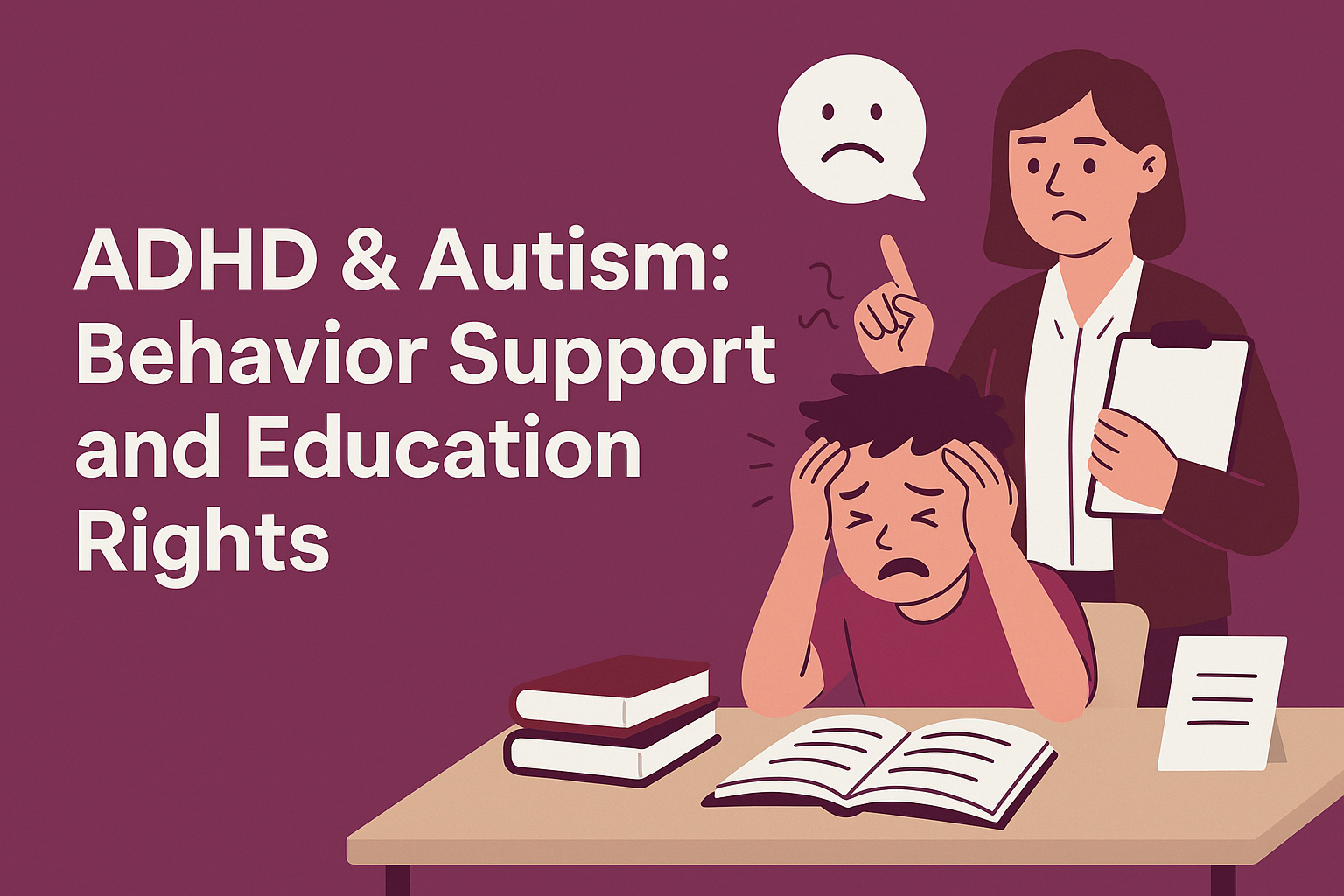
It’s so important to understand this complicated medical diagnosis of ADHD. With the right information, you as a parent can be an effective advocate for your child. Many families also benefit from ADHD Training, ADHD coaching, or consulting an IEP Advocate to fully understand how school supports like 504 Plans and IEP accommodations work.
Let’s talk about the FIVE prevalent myths around ADHD that can definitely impact needed support.
Myth 1: Passing Grades Mean No Need for Support
If a child with ADHD is getting passing grades, he/she does not meet the criteria for a 504 or IEP.
TRUTH: Grades alone do not determine eligibility for support in school. Students with IEPs or 504 Plans may still need accommodations for executive functioning, organization, or focus, regardless of their report card.
Myth 2: Schools Can Mandate ADHD Medication
Schools can recommend and also mandate the use of ADHD meds.
TRUTH: Schools cannot demand that the child take medication. This is a medical decision between family and physician. They ARE mandated to support this child academically regardless of medication. ADHD Advocacy and parent training for ADHD can help families navigate these situations.
Myth 3: Following the 504 Plan Is Optional
Following the 504 is optional and is up to the teacher.
TRUTH: Both the IEP and 504 MUST be followed at all times! It is not up to the teacher to decide if and when each accommodation in the 504 is followed. Tools like an IEP planner or consulting an IEP Consultant can help track compliance and ensure students get the supports they need.
Myth 4: ADHD Is Not a Disability
ADHD is NOT a disability. Many of the behaviors often shown in the classroom are intentional and should not be tolerated.
TRUTH: ADHD is one of the most researched of all psychiatric disabilities. It is a disability listed under OHI, other health impairment, under special education law. Families often explore ADHD coaching or ADHD behavioral therapy to support their child’s success alongside accommodations.
Myth 5: Parents Must Pay for Medical Evaluations
Schools may require parents to pay for a full neuropsychiatric evaluation prior to the school doing a psychoeducational evaluation.
TRUTH: If the school would ask for a medical or psychiatric evaluation, it would be up to the school to pay for this. But in addition, the school is mandated to support your child in areas of suspected disability. Utilizing resources such as IEP Services or ADHD Online Support can help parents understand their rights.
Conclusion
It is important to fully understand responsibilities of the school in the area of supporting your child with ADHD. You and your child have rights, and it’s so important to advocate for those rights to give your child the ability to succeed and have a strong self-esteem. Families who are well-informed through ADHD training, IEP planning, or ADHD Coaching programs often see the most positive outcomes.